Showing posts with label social media. Show all posts

Twitter Horror

So I'm out of First Impact subs. I will continue to accept submissions as they come in (because, hey, one less post to think up), and September will still have a prize because I said it would, but I might not continue the prizes after that. We'll see.

In the meantime, I present to you this true story, told in tweets.


What To Do With a Bad Review

I once stated that I thought it was possible to respond to a negative review in a positive way (see the first footnote of this post). I am now rethinking that theory. Here's what happened to an author I know.

(Names and most specifics have been wiped, just cuz I don't want things to get worse):

1. A Reviewer posted a bad review of the Author's book on a popular book site.
2. In the comments, Reviewer picked out a couple users who liked the book (and had little or no other activity on their accounts), suggesting these accounts were sock puppets -- created by the author to artificially boost the book's rating.
3. Reviewer's readers agreed and mocked Author for such "obvious" fake accounts.

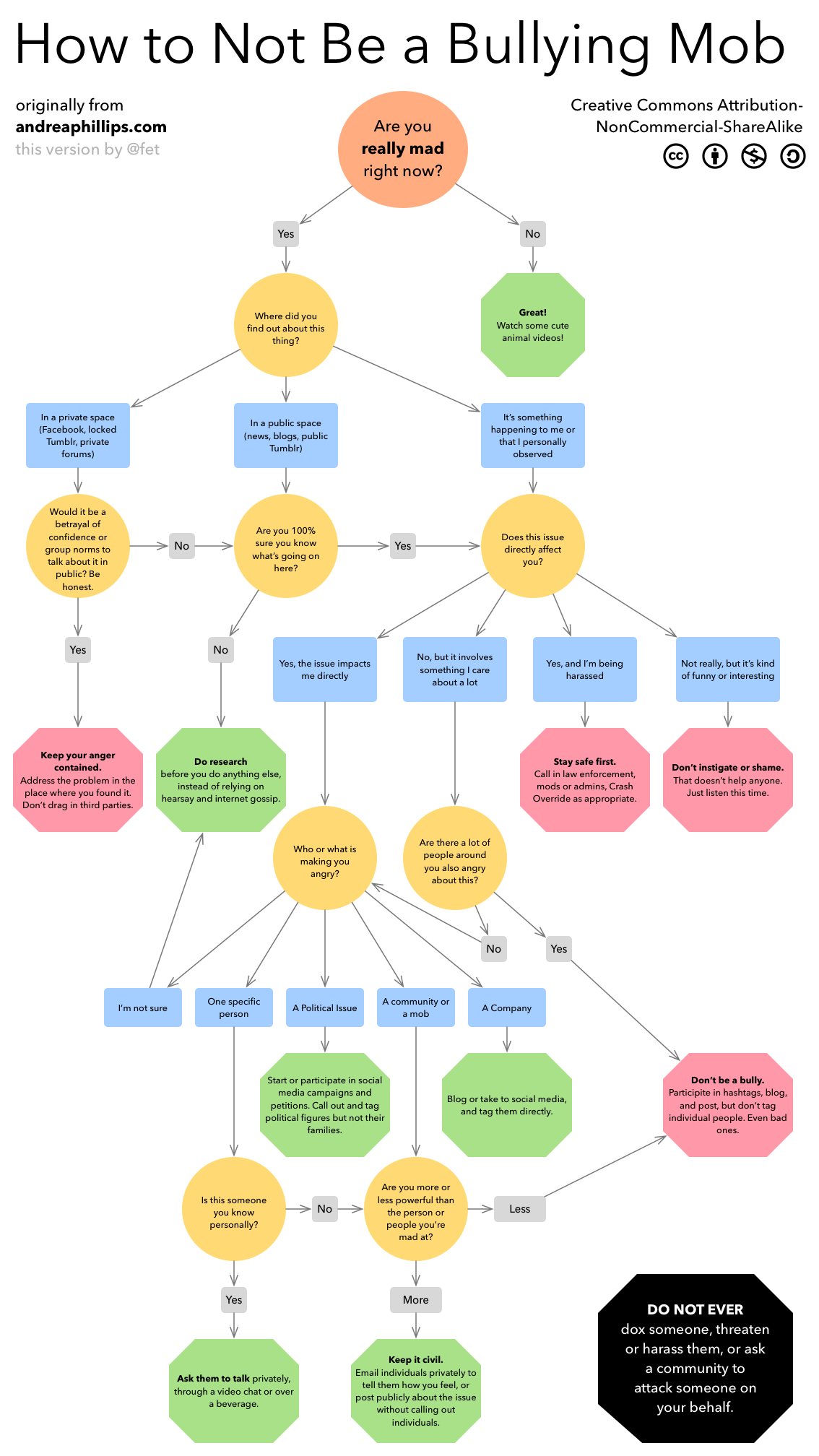
Before I go on, I want us to stop and think about what we would do in this situation. Assume the review counts (the book hasn't actually come out yet, so any buzz might count). For myself, it is taking every ounce of strength to take the high road right now and get to my point, rather than argue about Internet Immaturity and Spurious Evidence.

Oops. Moving on . . .

4. Author left a comment in the review thread -- not to comment on the review itself, but to mention that none of the accounts were fake (one of the accounts was actually her daughter).
5. Author was told somewhat bitterly that Reviewer is entitled to write whatever she wants about the book (note again, though: Author said nothing about the review).
6. A couple of people who liked the book spoke up in Author's favor (some in the thread, some in their own reviews).
7. These people were accused of being trolls, sock puppets, or both.

Then things got worse.

Friends of Reviewers left multiple 1-star reviews after not reading the book. Hateful comments were left on the reviews of the "fake" accounts. At one point, Author thanked a different reviewer for reading the whole book and being impartial, at which point two commenters blasted her for "dictating" what makes a review fair or not.

It's like this particular group of people has experienced other authors acting badly and assume Author is doing the same thing. They've seen authors with fake accounts and assume that any suspicious account is, likewise, fake.

To user-reviewers then: This is not (always) the Bad Author you're looking for. Sometimes people mean what they say, with no other agenda. Best not to assume.

But this whole thing just proves to me why commenting on bad reviews -- or trying to prove anything on the internet at all -- is generally a bad idea. Authors, don't comment on negative reviews. Yes, there are thousands of user-reviewers who will act professionally, even toward authors whose books they don't like. But it's not worth risking the ire of those who will misinterpret everything you do.

Professor Internet is right: it's better to just chill out and eat a sandwich.

What do you think? Would you have stayed out of it? (I don't know if I would have). Is there a way to step into this without making things worse?

So You're Thinking About Quitting Your Blog

Every time I see a blog shutdown, or hear someone lament how nobody reads blogs anymore, I get all worried. "Is my blog a waste of time? Should I focus my energy somewhere else, like Tumblr or Pinterest or dear-God-anything-but-Google-Plus?"

I don't think this blog is a waste (and your response to our family's emergency a couple of weeks ago just proves it to me). Blogs are basically the same as all the other places online. It's just a matter of how people interact and whether you prefer to express your thoughts in pictures, words, or 140 characters.

So really, whether you're on Blogger or Twitter or MyFutureLiveSpaceBuzzFeedJournal, this post applies to you, too. If you're thinking about quitting, remember these things:

1) You love to blog. (Oh wait, you don't? Maybe you should quit. If you hate it, social media's like the worst job ever, and then you don't get paid.)

2) You blog for you. We all know you can't please everybody, but the good news is you don't have to. Write what you want and get the word out there. You won't collect people just by sending them to your blog, but you will collect a percentage. That percentage is your people.

3) You blog for your people. We read blogs (and tweets and Facebook statuses and everything else) for information and/or entertainment. Do your best to give them what they want.

What do you think? Is blogging a waste of time? Why or why not?

Daddy, Where Do Crit Partners Come From?

I don't technically have a critique group. I don't meet with other writers on a regular basis, and the only person who sees my chapters as they come out is my wife. Part of that is there just aren't a lot of sci-fi/fantasy writers in Chiang Mai (though admittedly I haven't looked very hard, what with my abject terror of new things).

So I don't have a group, per se, but I do have critique partners -- those hardened souls committed to reading through the garbage I send them. I collect them the way other people collect Pokemon (though my crit partners complain a lot more when I try to stick them in those little balls).

Whenever people ask how to find good crit partners, I want to make a chart. Actually, that's misleading: I always want to make a chart.


DEFINITIONS
Blogging: Either they found my blog or I found theirs. We commented. We discovered common interests. Then one day, one of us tweeted or e-mailed The Question, and a crit partner relationship was formed.
Real Life: I hope this is self-explanatory.
Twitter: Similar to blogging, except I either never knew this person had a blog or I didn't follow it until later.
Through Agent: Not a road everyone can take, but I have recently collected crit partners because we share representation.
Critters.org: A great site if you want to exercise your critting muscles. And every once in a while, a stronger relationship is formed.

Conclusions? Well, blogging and reading blogs has been ridiculously profitable for me in terms of crit partners, but it's not the only road. And it's certainly not the fastest (I've been blogging for 4 years now).

If you're curious what my crit partners look like as writers, well . . . I made that chart too:


What's interesting to me is that, when we met each other, most of my crit partners were at the same spot as I was, and none of them were published. But 4 years later, I now have Real Live Published Authors who will happily read my stuff. That's kind of crazy to me, but I guess this is how it happens -- not by approaching the unapproachable, but by forming long-term relationships and sticking with them.

Where do you find your crit partners? Have any advice for people who have none?

Does Social Media Affect What Books You Buy?

A little while ago, The Intern had an interesting post on how much (or how little) social media promotion efforts affect sales. She challenged her readers to take a look at how many books they'd bought because of social media efforts vs. traditional methods (like, say, word of mouth).

So I did.


Of the books I've actually paid money for since 2008:
  • I chose 45% because I knew the author (meaning I had read one of their books before and liked it).
  • I chose 35% because of word of mouth (meaning a trusted friend told me I should read the book).
  • I chose 20% because of social media (meaning I discovered the book independently, from twitter, facebook, blogs, book trailers, etc).

I thought that might be a little misleading, since many of the books in that first category were purchased after I discovered the author via other means (for example, after I discovered Brandon Sanderson and read MISTBORN, I bought three more of his books). So I looked at how I discovered these authors.

Of the authors I've discovered (and bought their books) since 2008:
  • I heard of 70% from word of mouth.
  • I heard of 30% from social media.

So does social media work? Well, it worked for me, but there's one statistic I haven't mentioned. Why did I choose 2008 as my cut-off? Because I wasn't even on social media before then. Before 2008, 100% of the books I purchased were authors I knew or discovered by word of mouth.


So does social media work for reaching readers? I think it's a starting point. But I don't think it's worth plunging hours and hours and days into.

I do think it's a fantastic tool to network with other writers though. I got my ill-fated referral that way, along with some of the most awesome critique partners in the business. And Jay Kristoff recently blogged about how both Beth Revis and Scott Freaking Westerfeld discovered him and offered to read his book for a possible blurb (which upsets me, because I wanted Scott F. Westerfeld to blurb my novel, but I guess you have to have a book deal first).

Man, this publicity stuff is complicated. Does it ever work? What do you think?

In Which I Map Social Media to High School Like Everyone Else, but with an Actual Map

It's a little frightening to me how well my social media experience maps onto my high school ones. This is a picture of how. Your mileage, of course, may vary (particularly if you hung out in the gym -- for me, that was like one of the Circles of Hell).


 Classrooms: Where we did Actual Work. This is why we were at high school, but nobody wanted to admit it. And for sure nobody wanted to hang out here. If we could, we would've hung out outside all the time.

Rally Court: Our quad was loud, busy, and everybody could see what everyone else was doing (which was how some of the cheerleaders knew me as "one of those guys who plays cards all the time" (spoken with trademark patronizing giggle, of course)). But for the most part, it was easy to catch up with friends here.

For me, Facebook is like this. There are lots of people there, including old friends I thought I'd lost touch with. But mostly I go there to hang out with my family and real life friends. It helps that many of Facebook's features make it easier for me to maintain conversations across timezones.

Cafeteria: Like the Rally Court, this place was loud and crowded -- even more so because it was enclosed. You could never tell if someone heard you or not. But as I became more socially adept, I had new groups of friends who didn't hang out in the Rally Court, and this was where I found them.

Twitter. It's loud, crowded, and I never know if anybody's listening. But some of my best friends are there, and I like how quick and easy it is to follow people and read updates.

Academic Quad: This place was exactly like the Rally Court, but with fewer people. Occasionally a couple of us would wander there to get away from the noise, but mostly nothing happened there.

Maybe Google will figure out some magic feature to make everybody switch over, but I suspect that what most people dislike about the other social networks is caused -- not by privacy issues or odd features -- but by the sheer quantity of people. If Google+ ever goes big, it wouldn't surprise me to hear a bunch of the early adopters complain about it.

Library: This was where I preferred to be, though not for the reason you think. We played D&D in there. It was relatively quiet, and mostly only people who actually wanted to hang out with me came in there, much like this blog.

In truth, I think the particular features of a social network don't matter nearly as much as who is on it. At least that's how it is for me. If everyone I know suddenly migrated to Bebo or Wooxie or (God-forbid) back to MySpace, I'd be over there too.

Probably.

So am I the only one who played games all through lunch? What was your high school like?

Twitter Unfollows and Signal-to-Noise Ratio (Also, a Chart!)

I don't automatically follow people back on social media, but once I decide to follow someone, I rarely unfollow. Unfortunately, it does happen. The likelihood of getting unfollowed can be determined (sort of) from the following chart.


What constitutes signal?
  • Anything funny.
  • News I want to know.
  • Interesting links.
  • Talking to me directly (esp. saying nice things to me or retweeting my tweets).
 What constitutes noise?
  • Follow Friday tweets, thank you's, and any other random list of Twitter handles I don't know.
  • Non-tweets, like "Good morning" or "Good night" or "Eating justice peas again."
  • Spammy links to your blog, your book, etc.
  • Most tweets generated by other applications (e.g. Goodreads progress reports).
  • Retweets.
  • Lots of tweets at once, filling up my timeline.

Now understand, I'm not saying you should have no noise in your tweets. Everybody's got noise (I link to my blog and send retweets plenty). The important thing is to balance it out, or even signalify* the noise by making it funny or relevant.

And perhaps most importantly, there's the Relationship Factor. This is a measure of how well I know/like you. I'll tolerate a heck of a lot of noise from friends, people I enjoy talking to, or Nathan Fillion. In fact, the stronger our relationship, the more likely I am to interpret your "noise" as signal.

How do you build up the Relationship Factor? That's a different post.

I admit, it's a highly subjective algorithm, but it has to be. I'm not going to be interested in everyone's tweets. The point is, if you want to stay in people's timelines, pay attention to what most of your tweets are about. That way when you do have to pimp yourself, people will listen.


* Totally a word. Shut up.

How to Get Me to Unfollow your Twitter Feed

I know this is going to cause a swath of readers freaking out wondering, "Am I good enough? Will Adam unfollow me too?!" Because, of course, you're ALL worried about what I think of you. (That's how it is in my head, at least. Maybe I should see someone about that...).

Okay, so nobody's worried about my follow. But to avoid hurt feelings, I want to lay this disclaimer: I unfollow people rarely, and only when they define themselves by tweets like the ones below. If you do some of these sometimes, but other times post something witty or interesting, or converse with me like a human being (as opposed to a marketeer), then chances are very good you're safe.

But if these are the ONLY things you Tweet, then you might rethink your social media strategy:
  • Follow Friday (#FF) lists of random Twitter handles, with no explanation as to why I should follow all these people you crammed into 140 characters.
  • Publicly thanking a list of random Twitter handles for the #FF mention.
  • Tweeting "Good morning" every time you get on and nothing else.*
  • Links to your blog, your book, you, you, YOU.
  • Tweet 20 times within a couple of minutes, thus filling my entire timeline with you.

Again, if you sometimes tweet things like this, don't worry. I link to my blog post too (a lot of my traffic comes from Twitter), but I try to keep that from being the only thing I say. The people I drop are the ones who followed me just for the follow-back, who just want to up their numbers even though nobody's actually listening to them, who don't intend to interact or read anyone's tweets but their own.

What behavior on Twitter (or any social media) bugs you the most? What do you LIKE people to do?


* I realize some people use Twitter only for conversation, and "Good morning" is a way to let their followers know they're on and ready to talk, but if I don't converse with you, it's all I see. Besides, we can talk without me following you.

5 Twitter Tips I Don't Like (and 2 I Do)

I have kind of a love-hate thing with Twitter. On the one hand, I've gotten to know some awesome people because of it. Because of my random comments to people, I've found crit partners and even read a soon-to-be published trilogy.

On the other hand, it's too much. Too many people to follow. Too many links to click. Too many tips to "maximize" Twitter. With that, I give you FIVE TWITTER TIPS I DON'T LIKE:

1) When someone follows you, follow them back. An effective way to boost your numbers, but I don't know if it's the best way to use Twitter. When I see someone is following 1,000+ people, I wonder what their "follow" means (aside from, "Please follow me back so I can look more popular").

At some point, all those people you follow become just white noise. I realize there are lists to manage the tweets you keep up with, but eventually your "All Friends" list becomes meaningless because you're only listening to the lists you've made yourself.

2) Stop following inactive accounts. Apparently there are tools for this, but I don't care if someone I follow isn't active. I'm almost grateful! The folks I unfollow are the ones who clog my Twitter stream with tweet after tweet that I don't want to read.

3) Join Twitter chats. I was on IRC back when the internet was just a baby, and while I met some interesting people and learned interesting things, I also wasted a lot of time. Chat rooms--even useful, focused ones like #yalitchat--are attention suckers (and that's without the complex processing required to figure out who is responding to what). I say: "Use, but use with caution."

4) Personalize your Twitter background. Honestly, I don't even notice what people's backgrounds are. When I decide to follow someone, I look at what they're saying and what they add to my Twitter stream.

5) You have to interact with people. It's called "social media" for a reason, right? Well, yes and no. I love having conversations with people, but I'd hate to think people were unfollowing me just because I didn't talk to them (I'm trying to manage life too, you know?). Some people don't use Twitter for conversation at all, it turns out. They use it for (gasp!) news and information. Who knew?


I think I'm just rebelling against the idea that you "have to" do anything on Twitter. None of these are bad things, and they'll definitely get you followers. But followers are not readers. Though to be fair, here are 2 TIPS I'M A FAN OF:

1)  Be interesting and/or funny. It's cool with me if you just listen on Twitter, but if you're going to speak, try to write something people want to read (even if it's just a couple people--that's cool, too). Helpful tip: A list of random people with an #FF or #WW tag is not interesting.

2) Learn to do the previous tip in 140 characters. This is more of a writing tip than anything. When I started trying to write things for Thaumatrope, I discovered all kinds of words and characters I didn't need. You don't have to abbreviate, or use 'u' instead of 'you' (in fact, I wish you wouldn't). You just have to use the same economy of language you're supposed to have in a novel.

Also, Twitter is a great place to craft that one-sentence pitch of your story. If you can tweet it, you can promote it!

Enough out of me. How do you use Twitter? What tips have you found useful (or not)?

Blog Growth

I want to take a look at how a blog grows, what does and does not affect it, what you can do to...

Okay, that's a lie. I just want to geek out about statistics.


This blog has been running since May 2008. Other than the spikes, you can see that it has had a pretty steady growth. Let's take a look at the spikes, the dips, and things I think should've affected this growth but didn't.

THE SPIKES
Both spikes were a direct result of someone linking to a post (this one in Oct 2009 and this one a year later,  though I think that first spike is a fluke ... as I recall, most of those visitors came from Google looking for this picture). Although I definitely gained readers both times, there was no significant, long term change in the blog's readership, no matter how big the spike. This is almost certainly due to the lack of swearing, drinking, and scantily-clad women on my blog needed to keep people coming back.

MORAL: Swear more, dammit.

THE DIPS
The dips are usually when I posted less, like last August when I disappeared for two weeks. Makes sense in a graph that shows monthly readership as opposed to per post.

MORAL: Post more often to artificially boost my number of readers per month.

STUFF THAT DID (ALMOST) NOTHING
In Nov 2008, I started posting blog links on Facebook and Twitter. There's a little growth, but not what I'd call significant.

In Sep 2009, I started posting on a regular schedule. Again, there's growth, but that's more easily explained by the fact I went to 13 posts/month instead of 8 (see moral to THE DIPS, above).

In Apr 2010, I got published and ran a contest. I got a few extra page loads that month (usually indicative of new people checking out old posts), but otherwise no big change.

MORAL: Nothing matters. Give up.

CONCLUSION
I don't really believe nothing matters. The graph obviously shows growth, but it also shows there's no single event to magically boost your readers (at least not this side of being agented). I'd say the growth correlates more with me getting better at social media than anything else--commenting on blogs, interacting on Twitter/Facebook, stuff like that.

Not that I'm awesome (I'm SO not), but I try to figure out what people do and do not like to read, and then give them that while still being me. And I'm slowly learning how to actually talk to people, even if it's just over the internet. Honestly, this is stuff anyone can do.

So do you keep track of your readership stats? Have you noticed any trends in what works or doesn't?

More on "The Entire Freaking Internet"

NOTE: Apparently, I'm not the only one who decided it was Critique Week. On Monday, LT Host wrote about the different kind of beta readers, and Natalie Whipple is running a crit partner classifieds. I'm starting to feel redundant, but I'm nothing if not lazydetermined. Let us press on!


Stop me if you know this feeling. You find a critique group only to discover its members are where you were five years ago. Their comments are glowing because they don't know what to say, or else they're pedantic nitpicks that don't help you improve.* You'd prefer a critique from that recently-agented blogger you follow (or Neil Gaiman, if we're being honest), but they stopped answering your e-mails after that "I'll show you mine if you show me yours" comment you made on their blog.

What are you supposed to do?

Fortunately, God and Al Gore made the internet. Do you know how many unpublished authors of every skill level are out there? Thousands. Blogging, commenting, tweeting, and most importantly, critiquing. What you need to do is find the ones who (a) are around (or above!) your skill level and (b) like you a little. Then ask as politely as possible if they want to swap critiques.

How do you know if they like you? Comment on their blog, respond to their tweets, and be a friend. Don't be creepy. Don't be overly-friendly if you hardly know them. And DON'T interact just to get a critique (people can smell that).

How do you know their skill level? Most of the time you don't until you swap a critique. But generally, I say if you've got the time then swap. You can learn something even from beginners, and friends are friends regardless of (current) skill level.

Critiquing an 80,000-word manuscript is a big undertaking, so you need to know what you're asking of people. This is why you swap. This is why you're always professional. This is why you're understanding if they say no, regardless of the reason.

And this is why you're always, always thankful when someone does accept your offer. Even if this is the only manuscript of yours they read, you're making a friend, and that counts for a lot.


* I once got a critique for Pawn's Gambit that said, "Let me send you a story written in Scottish dialect. You deserve it for the headache I got from reading your story.... I suspect no matter what I say you're going to continue trying to write fantasy dialog."

Fortunately, by then I'd had so many people tell me they loved Air Pirates slang that the critique just made me laugh.

Finding Critique Partners

I've decided (somewhat randomly) this is going to be Critique Week on Author's Echo. Some of this stuff I've said before, but finding critique partners and getting/giving good critiques is so dang important, it's worth repeating.

But where do you find someone willing to read 80,000 words and tell you what they think? More over, where do you find people who are actually good at that sort of thing?

I know of three places, though the first two specialize in SF, Fantasy, and Horror. Hopefully folks can offer more in the comments.
  1. Critters Writers Workshop. Cost: Free. Wait Time: 4-5 weeks for each submission (you may submit many at once though, and they will be put up for critique one week at a time). Requirement: Critique at least 3 stories every 4 weeks. Submission Length: Up to 20,000 words.
  2. Online Writing Workshop. Cost: $49/year (first month free). Wait Time: Minimal. Requirement: Critique at least 4 stories for every submission (after the first). Submission Length: Up to 7,500 words.
  3. The Entire Freaking Internet. Cost: Free. Wait Time: Varies based on social media skills-slash-how nice you are: a week to years for the first submission. Subsequent submissions usually have minimal wait time. Requirement: Usually critique 1 story for every submission. Submission Length: No limit.
You laugh, but that last one is a gold mine. My first novel was critiqued by two friends (albeit an avid reader and a lit professor). My second by self-selected readers, still mostly friends and family.

Now, thanks to my *cough* "charisma" and a LOT of time wasted on the internet, I feel comfortable asking for critiques from multiple writers at or above my level, two agented authors, and two published (or scheduled-to-be-published) authors. Shoot, if I can make friends this awesome, so can you.

Social media, man. It really works.

Followers, Readers, and Venn Diagrams


I don't actually like the Followers widget on the sidebar there. I mean, yes, it feels nice every time the number goes up, but it's misleading. Followers do not mean readers. Readers don't mean fans. Fans don't mean friends. And really, I think we all want our blog/Twitter/whatever followers to be one of those last two.

Getting followers is easy. Well, not easy -- it's a lot of work. But it's mostly within your control: comment on and follow 1,000 blogs, and you will instantly get 100 or more followers. Just like that. Elana Johnson has some great advice on getting lots of followers, and I agree with every one of her points. But followers do not mean readers.

Turning followers into readers is a bit harder, but still within your control. Just write something people want to read. It takes practice and (again) hard work to figure out topics both you and other people are interested in (hint: it's not you, not at first), but it can be done.

Now I'm not large enough in the public sphere to understand how readers become fans, though I do know how to make friends (be one). But here's a secret: it's not a progression. The diagram above is far too simple. In reality, it's more like this:


You can have readers who aren't followers. Friends who never read your blog. Followers who genuinely like you and would help you out, but don't have time to read all your posts. Readers who like your blog and like you, but aren't really a fan of your fiction.

It's a complicated world, but the encouraging bit is this: you don't have to get a lot of followers to be successful. You don't have to follow everyone who follows you. You don't have to chain yourself to that stupid widget.

I admit, things can change when blogging becomes part of your profession. In the comments of Elana's post, she points out that her editor sees a 1400-follower blog. In fact it's the only measuring tool an editor, or anyone else, has to see how popular a blog is. But Elana uses her blog to make money. If only 100 of those followers buy her books, that's 100 books she wouldn't have sold otherwise.

But most of us aren't there yet. If I got 500 more followers right now, what good would it do me, even if I could turn them into fans? Not much. Blogging for me is more of a long term investment, so I invest slowly. I use it for practice, for networking, and yes I'm looking for fans and friends, but only so I have some folks to celebrate with when I sell something. I don't need "followers" to do that.

Twittering from the Other Side of the World

I've been using Twitter for a while now, and I like it, really. It's how I met some of my favorite people. But often I get the feeling I use it differently from other people. A lot of that is just living on the other side of the world.

I don't know how Twitter is for you, but when I get on the computer in the morning, I'm greeted with 50-100 tweets from the folks I follow. I'm too obsessive-compulsive to NOT read them all, even though most of them are conversations long dead. Occasionally I find a piece of information or a link that makes me glad I searched through them, but that, of course, only reinforces my OCD.

This is why I have to limit who I follow. I WANT to follow everyone who follows me, but I can't. And I can't take part in most conversations that occur during the American day. I realized how big this was while we were in the States. I got to chat with EVERYBODY. I finally saw what Twitter was good for. Unfortunately, it's not very good for me.

So I just have to use it my way. I'll toss out a tweet when I wake up, maybe another before I go to bed. I respond to any mentions, even if it's hours later. Really, there's little else I can do. And every once in a while I'll get someone who stays up extra late, or someone from the UK, and have a really great conversation. That, really, is why I'm still on it.

How do you use Twitter? Do you read everything, or only whatever shows up when you're on? Do you follow everyone who follows you? Do you expect others to do the same?

(I want to ask something of the folks who don't use Twitter, but all I can think of is "Why don't you use it?" (A) That sounds rude, and (B) I already know most of the possible answers. But feel free to chime in even if you don't use Twitter. I never want to be exclusive.)

Networking for the Unpublished Loser

I hate networking. I hate small talk, I hate getting business cards I'll never use, and I hate feeling like I have to "connect" with people just so I can use them to further my career.

Thing is, that's the exact opposite of what networking is.

Networking is making friends. It's connecting with people and learning what they do. It's being yourself with others who are being themselves too.

Networking is following a contest winner because you really enjoyed their entry. Commenting on their blog because they're also into zombies and ninjas and pirates. Entering contests they run and discovering that you like each others' stories enough to swap critiques.

Networking is following an author whose book you enjoy. Friending them on Facebook. Discovering that you went to the same college and share a mutual friend. It's just talking.

Networking is following an agent's assistant on Twitter because they're funny. It's replying to their tweets in a (hopefully) funny, professional manner that gets them interested in your tweets. It's caring about their lives, even when things don't go well or they cease to work for an agent.

Sometimes I get a new critique partner out of networking. Sometimes I get someone willing to spread the word about a contest or a short story I got published. But whether or not they choose to be helpful to me, I always get a friend.

And sometimes I befriend someone who goes on to get an agent or a book deal, someone who--theoretically--could give me that Holy Grail of the unpublished: a referral. But here's the thing: if I did all this networking just to get a referral, I'd never get this far. People can smell Self Serving, and it stinks. Even now, I would think long and hard before asking for such a thing, simply because the friendships are more important to me than the (supposedly) quick path to getting published.

And that's the point. Networking isn't about using people. It's about finding friends. And the thing about friends is, when you really need them, they're there for you.

So that's my advice today. Be kind. Be funny. Be clever. But mostly, be a friend. Maybe that friendship will be useful to you some day, maybe not.

Hopefully, by then it won't matter.

Self-Promotion (Repost)

(My laptop is nearly fried; my internet connectivity is limited and I have to resort to the touchpad because I can't plug in my mouse. Consequently, working at the computer is less fun than normal. Plus I understand there's some kind of holiday going on.

All of that meant to say: (1) I'm reposting, here are my excuses, and (2) I'm getting a new computer soon (yay!)).


Reposted from November, 2008 (though probably new to you).

I hate the idea of self-promotion. Who doesn't? Who wants to be that kid who says, "Hey, everybody! Look at me!!" Okay, fine, well I never wanted to be that kid. Now I find myself on the outskirts of an industry that requires it.

So I've been researching self-promotion a little. One thing I've discovered is that I've already been doing it. I mean, the missionary "industry" revolves around self-promotion just as much as the publishing one does. Perhaps more so.

How you promote yourself depends, apparently, on how much money, time, and morals you have. If you have a lot of money, hire a publicist. If you have a lot of time, build a website, make profiles on social networking sites, and spend time on other people's blogs, the social net, forums, etc. - all the while linking back to your website. If you're low on morals, this time can also be spent comment spamming and writing fake reviews.

It's like this. Let's measure the amount of time and money invested in self-promotion with what we'll call your Publicity Quotient. The more you invest in self-promotion, the higher your PQ (low morals increase your PQ slightly, with an increased risk of drastically lowering it when you're found out; high morals, sadly, do nothing). With that in mind, take a look at this completely unscientific, made-up chart:


Not terribly mathematical, I know. But beyond the general guideline that the more you put in, the more you'll get out, publicity is largely luck and magic - becoming a breakout bestseller even more so.

Also, anyone who tells you how to promote yourself, without mentioning in the same breath that you need a product worth promoting, is taking you in. If your book sucks, you can sell copies with publicity but it won't do you much good in the long run (see low morals).

That's my take on the whole thing, anyway. I plan on doing self-promotion the same way I've been doing it. I'll provide places for people to get hooked in, I'll get the word out with a non-spamming announcement, and most importantly I'll try to be genuine. That means leaving comments because I have something to say, not because I have something to link to. It means making profiles on social networks that I'm actually a part of (sorry, MySpace, guess that means you're out).

And it means trusting others to do the reviewing and word-of-mouth advertising for me. If it doesn't happen, it just means I need to write a better book next time.

And when that doesn't work, I'll upgrade my spambot.

Keeping Up With the Internet

Depending on how you count, there are over a hundred social networking sites out there and God only knows how many blogs. It's impossible to keep up with everything, even if you cut out all the crap you don't care about.

My own personal slice consists of 57 blogs, 23 Twitterers, and 244 Facebook friends (at current count). I interact in these venues as well, writing tweets, commenting on Facebook and blogs, as well as updating two blogs of my own.

I don't have the time to do all this, of course. I've got five kids and a novel to write. I want to share with you a couple of tools that have made my life simpler and (if you haven't already found similar tools) can maybe make yours simpler too.
  1. Google Reader. In the year 2009, you have to have some kind of RSS reader (similarly, if you have a website, you have to have a feed - I'm looking at you, Homestar!). I like Google Reader because (a) it checks the feeds automatically, (b) it feels like Gmail, and (c) I heart Google - they may be the New Evil, but they know how to do a GUI.
  2. Twitterfox. I started using Twitter while looking for a way to update my Facebook status and Gmail status at the same time.* I stayed there because it connected me to certain friends and the cost in time to use it was small - but only after I found Twitterfox. There are about a thousand ways to read and send Twitter updates, but I like this one because (a) it's a Firefox extension, so I don't have to open another app to use it and (b) it's quiet and unobtrusive (once you tell it not to pop-up a window).
  3. Ping.fm. I like status updates. They're quick and informative. It started when some friends wrote Gmail statuses that started with "is" (as in "Adam Heine is..."). Facebook was doing the same thing when I got there. When I got around to Twitter, I found myself writing 3 separate updates to separate groups of friends. Ping.fm is a solution to that. Now I can write a single update (sent through Gmail chat even) that automatically gets sent to wherever I want.*
If these tools don't do it for you, I bet you can find some tools that do. Examine your internet surfing for areas of redundancy or wasted effort (e.g. manually checking 10-20 blogs to see if they've updated yet), then look for tools that solve it. If you look hard enough, I can almost guarantee someone has written the right tool(s) for you.

* I have found a way to get Twitter to update Gmail, but it still works less than half the time. I'm hoping they fix the problem soon, or ping.fm figures out a solution. (You hear me, Google Titans? I want you to work with other developers!).

Really, Really, Really Short Fiction

Twitter: a free social networking/micro-blogging service, that allows its users to send and read other users' updates of up to 140 characters in length.

Thaumatrope: A sci-fi/fantasy/horror online fiction magazine that uses Twitter to accept and publish speculative fiction of 140 characters or less.

What a crazy, great idea. They pay authors $1.20 per story. That's almost two plates of Pad Thai. I just might get in on this.

UPDATE: I forgot to mention, you can read Thaumatrope for free. Either on their website or, for instant gratification, via Twitter. And because it's Twitter, you can get these stories sent to your cell phone if you want.

Self-Promotion

I hate the idea of self-promotion. Who doesn't? Who wants to be that kid who says, "Hey, everybody! Look at me!!" Okay, fine, well I never wanted to be that kid. Now I find myself on the outskirts of an industry that requires it.

So I've been researching self-promotion a little. One thing I've discovered is that I've already been doing it. I mean, the missionary "industry" revolves around self-promotion just as much as the publishing one does. Perhaps more so.

(Speaking of which, those of you reading this from Facebook might like to know that this is being imported from my other blog - my writing one. I'm still importing the missionary blog such that it appears on my wall, but not into my notes anymore. I hope that's okay.)

How you promote yourself depends, apparently, on how much money, time, and morals you have. If you have a lot of money, hire a publicist. If you have a lot of time, build a website, make profiles on social networking sites, and spend time on other people's blogs, the social net, forums, etc. - all the while linking back to your website. If you're low on morals, this time can also be spent comment spamming and writing fake reviews.

It's like this. Let's measure the amount of time and money invested in self-promotion with what we'll call your Publicity Quotient. The more you invest in self-promotion, the higher your PQ (low morals increase your PQ slightly, with an increased risk of drastically lowering it when you're found out; high morals, sadly, do nothing). With that in mind, take a look at this completely unscientific, made-up chart:


Not terribly mathematical, I know. But beyond the general guideline that the more you put in, the more you'll get out, publicity is largely luck and magic - becoming a breakout bestseller even more so.

Also, anyone who tells you how to promote yourself, without mentioning in the same breath that you need a product worth promoting, is taking you in. If your book sucks, you can sell copies with publicity but it won't do you much good in the long run (see low morals).

That's my take on the whole thing, anyway. I plan on doing self-promotion the same way I've been doing it. I'll provide places for people to get hooked in, I'll get the word out with a non-spamming announcement, and most importantly I'll try to be genuine. That means leaving comments because I have something to say, not because I have something to link to. It means making profiles on social networks that I'm actually a part of (sorry, MySpace, guess that means you're out).

And it means trusting others to do the reviewing and word-of-mouth advertising for me. If it doesn't happen, it just means I need to write a better book next time.

And when that doesn't work, I'll upgrade my spambot.